

Vaginus Maximus
Now We're Supposed to Biohack Vaginas?

Hi horny readers! Thank you so, so much for reading ADULT SEX ED, a newsletter about the stories behind our sexual beliefs—where they came from, who invented them, and why they stuck.
I’m Dani Faith Leonard, a filmmaker, writer, and performer. A while back, I started to ask myself a question: why do we think what we think about sex? Expect investigative articles, weird sex history, and sharp humor, delivered to your inbox every week. Ready to plug the holes in your education? Okay, let’s go!
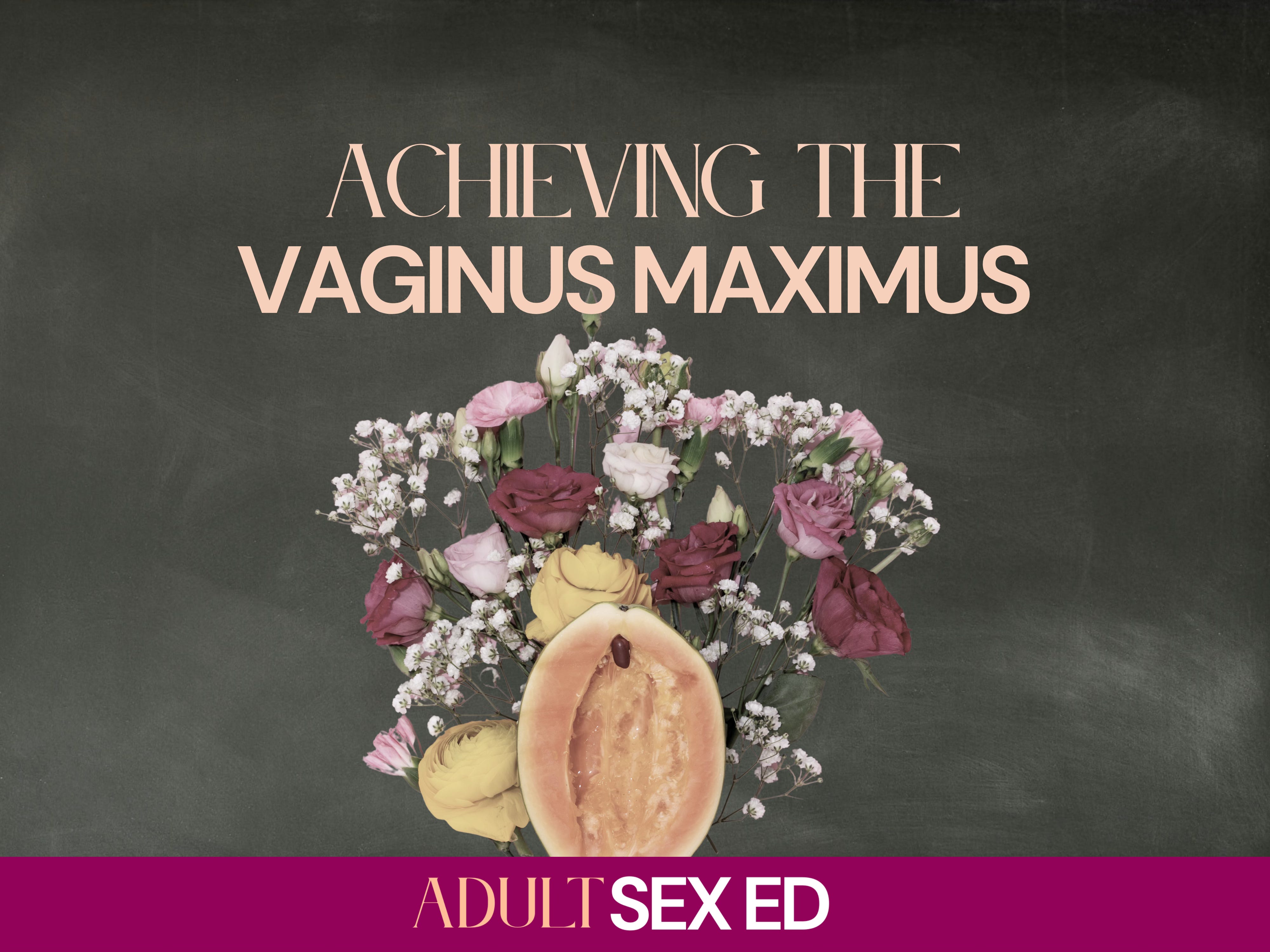
Last week’s newsletter was about the obsession with penis size, which has reached new heights—and girths, I guess—due to a series of internet trends. So I thought it would be appropriate if this week was all about a new obsession with optimizing the vagina. Achieving a vaginus maximus.
By the way, in this context vaginus maximus refers to the greatest vagina, not the largest (vaginus optimus just wasn’t as funny). The woman often cited as having the largest recorded vagina was a Canadian woman named Anna Haining Bates who stood at 7’11” tall and was reported to have a vaginal circumference of 19 inches. She once gave birth to a 23 lb. baby who sadly didn’t survive. That’s something, eh?
Vaginal optimization was the talk of the internet briefly last month when tech entrepreneur and anti-aging biohacker Bryan Johnson made headlines by posting the results of his girlfriend’s vaginal microbiome test. He bragged that the results placed her in the “top 1% of all vaginas.” Delivered like a quarterly earnings report rather than a compliment to his partner's sexual magnetism, the announcement irked people, but also revealed something important. There are women obsessively testing their vaginas in pursuit of a particular standard of perfection.
From a sex-history perspective, there's a fascinating irony. Historically, the vagina was often portrayed as unknowable and mystifying. Ancient societies knew so little about vaginas that women were diagnosed with conditions like wandering womb and hysteria whenever a problem arose. There were pervasive myths, like the vagina dentata: the magical twat with teeth. The historical figures rumored to have “powerful” vaginas and sexual prowess, like Cleopatra and Catherine the Great, were also seen as mysterious.
Today, the vagina is increasingly portrayed as knowable through microbiome hacking, biomarkers, and health-tracking technologies. The superior vaginas are now the most knowable, not the most mysterious.
The vaginal microbiome is a real and important area of scientific research. Researchers are learning more about how the microbiome relates to conditions such as infections and fertility. But the science is still developing, and many commercial products and influencers move much faster than the evidence. Organizations are also worried about the lack of regulation of companies selling microbiome-based tests. Testers often send in a swab of vaginal secretions (least sexy sentence ever). What are all of these companies doing with all of this pussy data? I cun’t tell ya. (Sorrrrrrryyyyy.)
The question isn’t whether the science is real, but why every era seems to develop its own vision of the “right” kind of vagina. Achieving this ideal usually comes with purchasing the right products. In the 20th century, advertising and popular culture promoted ideals of cleanliness, freshness, and attractiveness, so flowery douches were the rage to solve a “problem” that women never had. Microbiome hacking represents a modern version of a very old pattern: transforming normal variation in women's bodies into something that requires constant monitoring and spending.
Instead of asking whether a vagina is “clean enough,” the question becomes whether it is “optimized enough.” It’s probably no surprise that at-home microbiome tests aren’t cheap. Most of the ones available online cost between $150 and $250. Test if you want to, but obsessive testing can take a mental toll, especially since doctors have noted that the microbiome changes throughout the menstrual cycle.
Can we just agree that the optimal vagina is in the eye of the beholder? Can we unfuck our algorithms so we’re not constantly being sold the latest vaginal trend? I think it’s fair to proclaim that you have a top 1% vagina with absolutely no evidence. You too can have a vaginus maximus—no obsessive testing required.
Make sure you’re subscribed so you never miss a post!
If you enjoyed this newsletter, please share with friends, so they can be hilariously informed! You’ll get rewards every time you share and can earn a comped membership.
Don’t miss these recent newsletters:


